
Acreage, lots and job sites
Commercial Property Hydroseeding in Miami, FL
Fast cover on disturbed ground so a site can stabilize, pass inspection and close out.
- No-charge site visit and a written quote before any work
- Seed, soil prep and storm protection on one itemized quote
- Grass choice explained for your sun, shade and irrigation
Seeding That Helps a Site Close Out
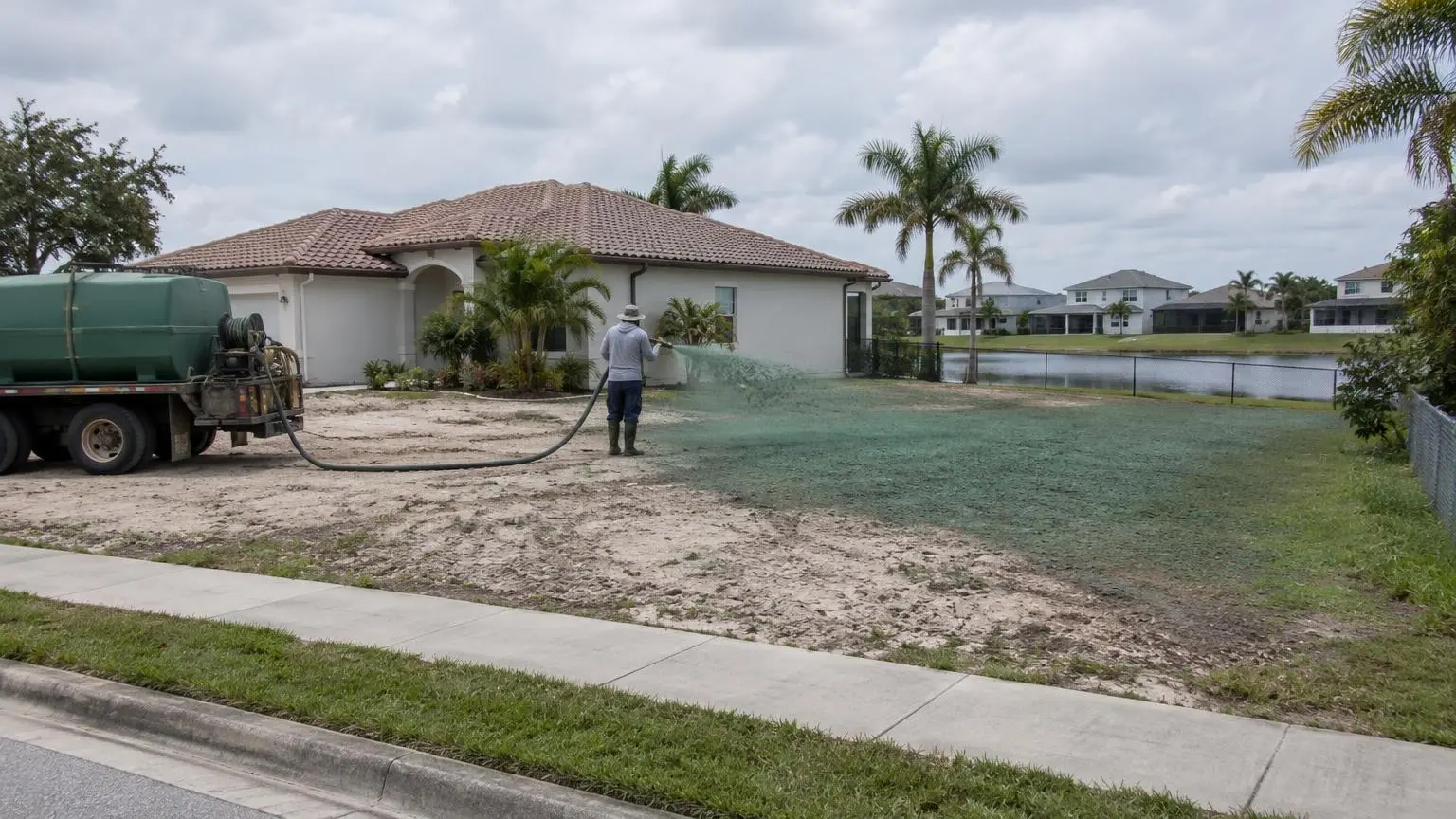
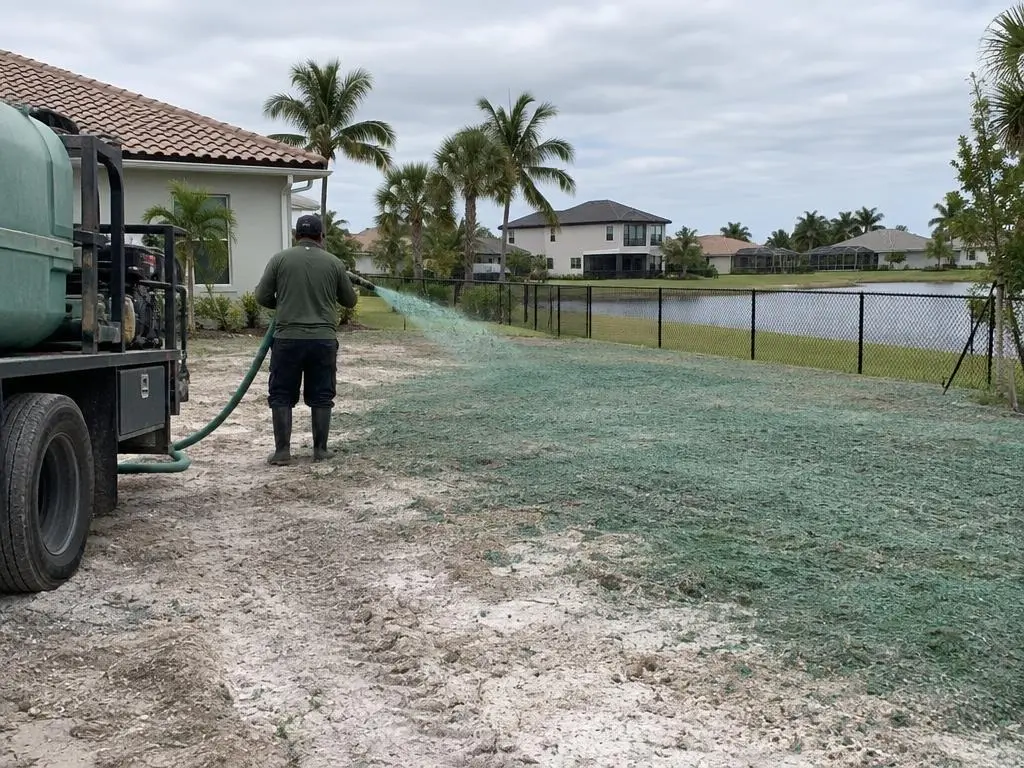
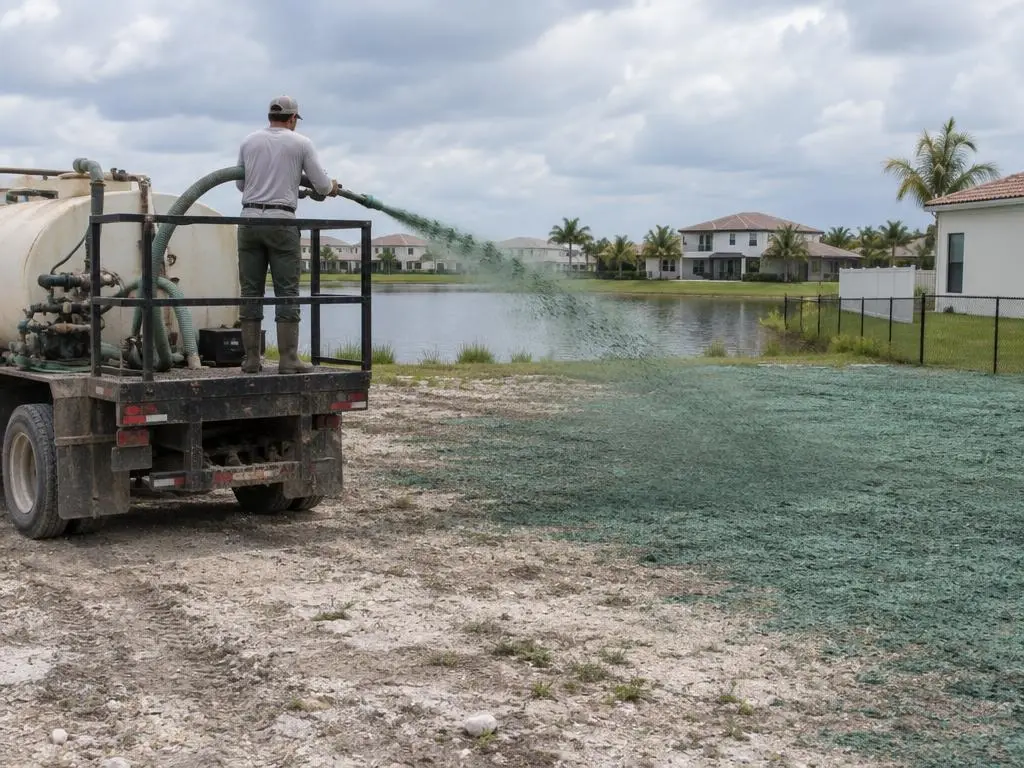
Commercial property hydroseeding in Miami covers the ground that builders, developers, schools, warehouses and property managers need green and stable: finished building pads, common areas in new subdivisions, retention pond banks, road shoulders, utility corridors and vacant parcels. Elite Hydroseeding Miami brings a truck-mounted tank and hose, so we can cover large areas in a day and reach spots a sod crew cannot. Among hydroseeding companies in South Florida, what we focus on is matching the seed and mulch to what the site has to do next, whether that is pass a stormwater inspection or become a maintained lawn.
Why stabilization matters in Florida
Florida DEP requires Construction Generic Permit coverage for projects disturbing one acre or more, and for smaller parcels that sit inside a larger development plan. The operator must keep a stormwater pollution prevention plan and use practices that limit erosion and sediment. Coverage is ended with a Notice of Termination filed within 14 days after the site reaches final stabilization. In plain terms, bare soil keeps the permit open. Seeding and mulch are usually the last items between a finished site and a closed permit, and that is where we fit in.
Ground conditions on Miami job sites
Site work here often means imported fill over limestone, rock fragments, compacted pads and very little organic matter. UF/IFAS describes construction-disturbed residential soils as typically worse than natural ones, and the same is true on commercial pads. Before spraying, we look at what will hold seed: loose, rough-graded fill takes slurry well; slick, rolled pad surfaces need scarifying first. Where an owner wants a lasting lawn and not just temporary cover, we discuss adding topsoil to the finished areas.
Seed mixes for commercial ground
For most large areas we use bahiagrass, which UF/IFAS notes is low-input, deep-rooted and a good choice anywhere without an irrigation system. Pensacola bahia produces more seed heads, which makes it less attractive as a lawn but suitable for roadside plantings, while Argentine is denser and greener for areas that will be mowed and seen. Seeded bermuda goes on sunny, high-traffic areas such as sports fields and lawns around buildings. For short-term cover on a phased site, we can apply mulch and tackifier with a lighter seed rate.
Working around the rains
The wet season brings daily thundershowers from about late May into October, and much of the year's rain falls in those months. That is good for germination and hard on bare, sloped ground. On wet-season jobs we raise mulch rates, spray retention-pond banks with tackifier, and pair the seeding with silt fence or blankets where water concentrates. In the dry season we plan irrigation or water-truck visits with the site manager.
Working with your schedule
General contractors and developers usually need seeding in phases, often on short notice once an area is released. We work from your site plan, mark the areas and square footage on the quote, and can return for touch-ups after a storm or a utility cut. If the SWPPP calls for specific practices, we follow the plan as written.
Commercial hydroseeding services we provide
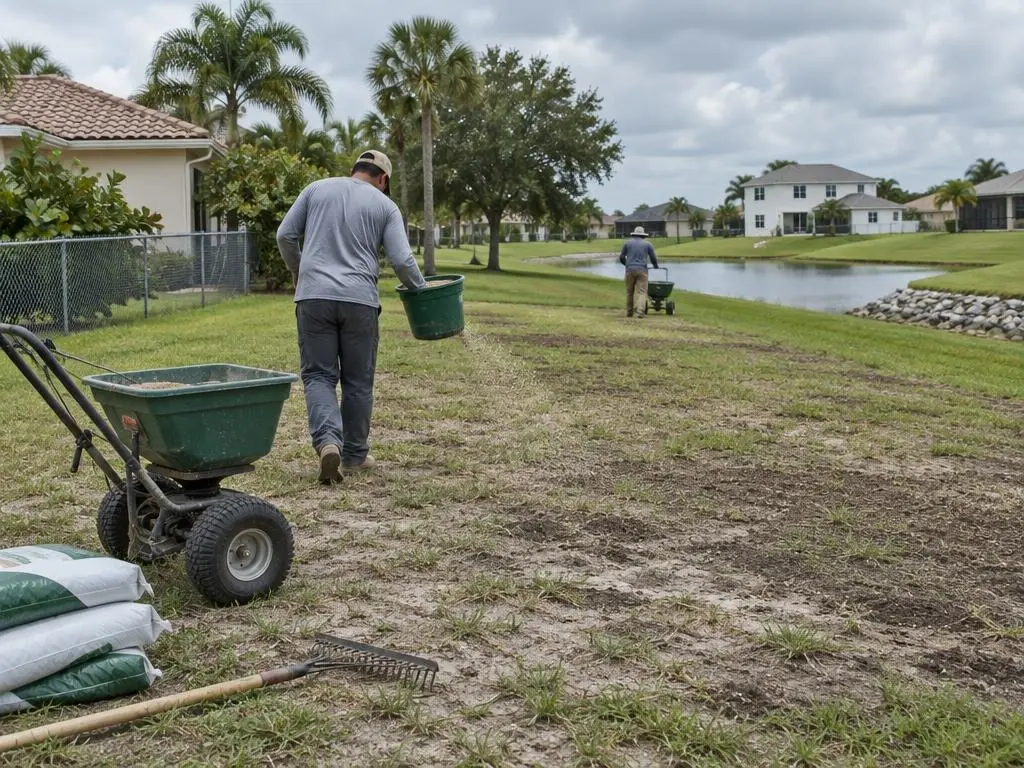
Seeding of pads and common areas, pond banks and swales, roadside shoulders, and temporary stabilization of stockpiles and phased areas. We also put down erosion control blankets and install silt fence and inlet protection, so a site can have the seed and the sediment controls from one hydroseeding contractor.
Commercial Work We Cover
Large areas and awkward ones, seeded to the plan.
Building pads and outparcels
Cover for finished pads and vacant lots waiting on construction.
Subdivision common areas
Entries, buffers, easements and open space in new communities.
Retention pond banks
Seed and tackifier on side slopes, with blankets where water runs.
Road shoulders and swales
Seeding along drives, access roads and roadside swales.
Temporary stabilization
Mulch and seed on stockpiles and phased areas to keep soil in place.
Post-storm touch-ups
Return visits to reseed washed or disturbed spots.
Published Ranges for Large-Area Seeding
| Area | Range (source) |
|---|---|
| Per acre, hydroseeded (LawnStarter) | $2,136 to $4,897 |
| Per acre, hydroseeded (Fixr) | $2,000 to $4,000 |
| One acre (HomeAdvisor) | $2,600 to $8,700 |
| Half acre (HomeGuide) | $3,500 to $5,500 |
| City park bid, per acre, 2023 (North Little Rock, AR) | $2,595 and $3,325 |
These are published guides and one 2023 public bid, not South Florida quotes. Site access, slope, water supply and phasing all affect price, and we quote each site from the plans and a walk. For a feel of the market only; your price comes in a written quote.
How a Site Gets Seeded
1. Plans and walk
We review the site plan and SWPPP, walk the areas and confirm water access.
2. Itemized quote
Areas, square footage and any site controls are listed separately.
3. Surface prep
Scarify slick pads and clear debris so slurry can bond.
4. Spray in phases
We seed areas as they are released and record what was covered.
5. Follow-up
We check germination and touch up washouts before close-out.
Why Choose Us for Commercial Property Hydroseeding
Permit-aware
We understand what final stabilization means for a Florida CGP close-out.
Seed plus site controls
Silt fence, inlet filters and blankets can go on the same quote.
Phased scheduling
We come back as areas open instead of waiting for the whole site.
Commercial Property Hydroseeding Questions
What do commercial hydroseeding contractors charge per acre?
Fixr puts an acre at $2,000 to $4,000, and LawnStarter at $2,136 to $4,897. Site prep, water hauling and slopes change that, so we quote from the plan.
Does seeding count toward final stabilization?
Seeding and mulch are standard stabilization practices, but what counts as final stabilization is set by your permit and SWPPP. We apply what the plan specifies and can document the areas covered.
Can you seed retention pond slopes?
Yes. Gentle banks take seed and tackifier well. Steeper banks or areas where water runs get an erosion control blanket or a recommendation for sod.
Do you bring your own water?
We fill from a hydrant meter or on-site source arranged with the site manager. Water access is confirmed during the site walk.
Commercial Property Hydroseeding Service Areas
- Hydroseeding in Miami, FL
- Hydroseeding in Homestead, FL
- Hydroseeding in Florida City, FL
- Hydroseeding in Redland, FL
- Hydroseeding in Cutler Bay, FL
- Hydroseeding in Palmetto Bay, FL
- Hydroseeding in Pinecrest, FL
- Hydroseeding in Kendall, FL
- Hydroseeding in Country Walk, FL
- Hydroseeding in South Miami, FL
- Hydroseeding in Coral Gables, FL
- Hydroseeding in Doral, FL
- Hydroseeding in Medley, FL
- Hydroseeding in Hialeah, FL
- Hydroseeding in Miami Springs, FL
- Hydroseeding in Miami Lakes, FL
- Hydroseeding in Pembroke Pines, FL
- Hydroseeding in Weston, FL
- Hydroseeding in Davie, FL
- Hydroseeding in Southwest Ranches, FL
- Hydroseeding in Cooper City, FL
- Hydroseeding in Hollywood, FL
Get a Commercial Property Hydroseeding Estimate
Send the site plan and we will walk it with you.