
South Florida seeding and site cover
Hydroseeding in Miami, FL
Seed, mulch and soil work planned for limestone ground, summer downpours and grass that grows all year.
- No-charge site visit and a written quote before any work
- Seed, soil prep and storm protection on one itemized quote
- Grass choice explained for your sun, shade and irrigation
Seed That Holds Through a Miami Summer
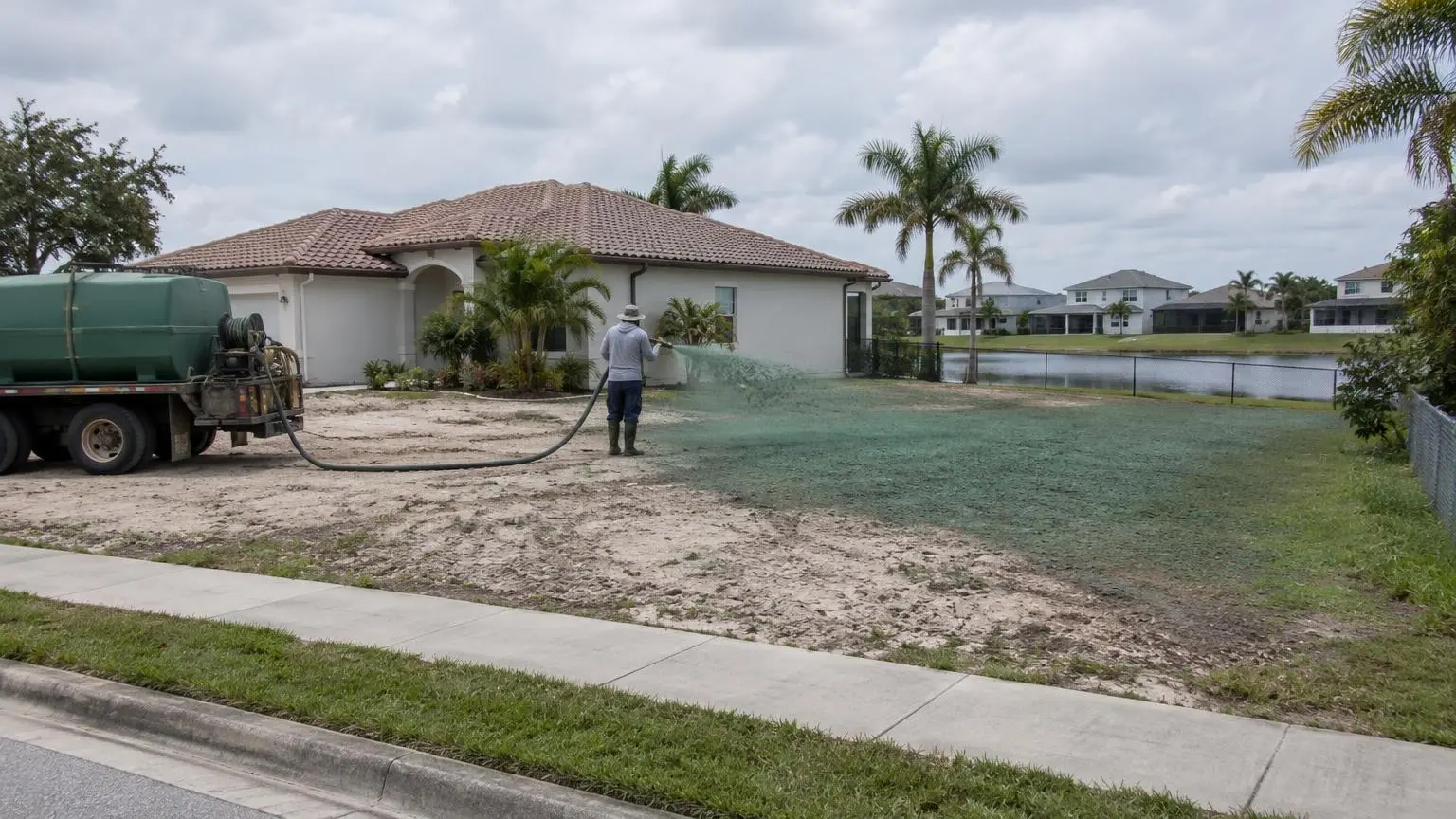
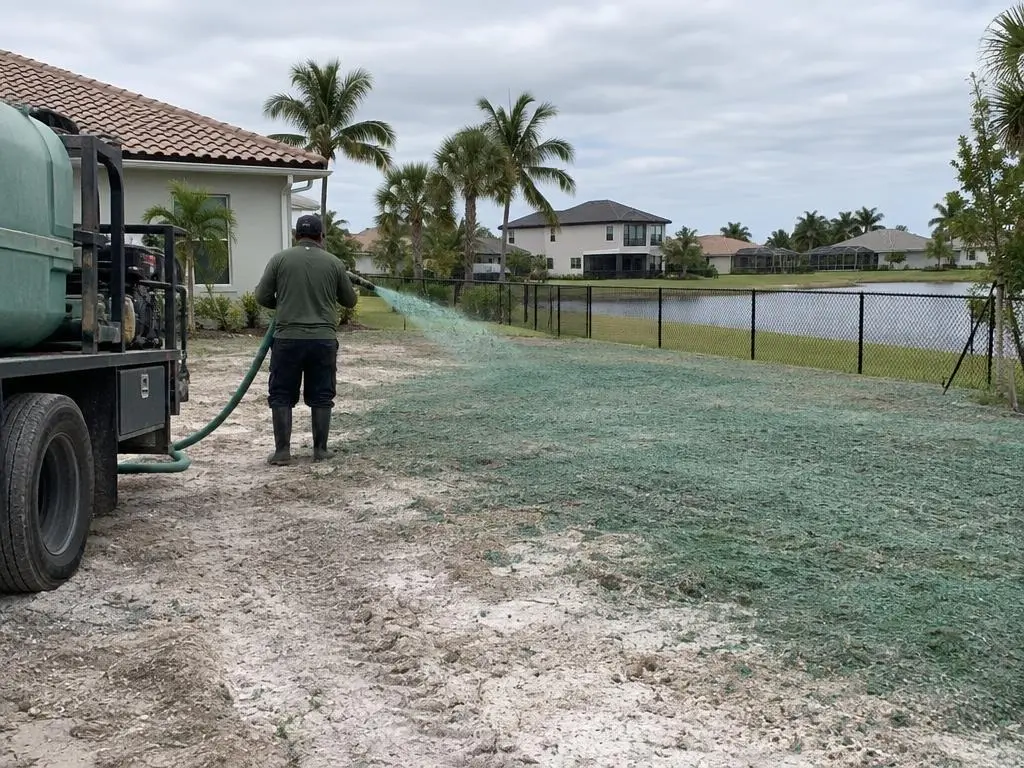
Hydroseeding in Miami is the practice of spraying seed, wood or paper mulch, tackifier and water together over prepared ground, so from the first hour the seed sits wet, covered and glued in place. Elite Hydroseeding Miami does this for homeowners, builders and property managers across Miami-Dade and southern Broward. As hydroseeding contractors we also handle what comes before and around the seed: lot grading, topsoil, erosion control on swales and banks, and silt fence on active jobs. The method works here, but only when it is matched to the local ground and weather, so this page explains both.
Rock first, soil second
Much of eastern Miami-Dade sits on the Miami Rock Ridge, an oolitic limestone outcrop that rises 23 to 28 feet above sea level and runs from about North Miami Beach down toward the upper Keys. Its surface is karst: pitted rock, solution holes and small caves. UF/IFAS adds that most Florida soils are sand-based, with little organic matter and limited ability to hold water or nutrients. On a typical Miami lot that means a few inches of sandy soil or fill over rock, and a new lawn that dries out fast unless it gets a real root zone. We probe the ground at the site visit, and where the soil is thin we bring in topsoil or compost before we spray. UF/IFAS suggests mixing organic amendments at 3 to 6 cubic yards per 1,000 square feet into the top 6 inches, and that is the kind of prep we price for.
The water under your yard
Beneath that rock is the Biscayne Aquifer, a shallow, highly permeable limestone layer that supplies most of the metro's drinking water. Because the aquifer is so close to the surface, it is very exposed to whatever washes off the land above it, and it comes nearest the surface around Hialeah and Miami Springs. Bare dirt, loose fertilizer and construction mud all end up somewhere. Fast cover is one of the simplest ways to keep soil and nutrients on your lot instead of in the canals and storm drains.
Two seasons, not four
Miami has a tropical monsoon climate. Between 1956 and 1997 the rainy season started on a median date of May 21 and ended around October 17. The 1991 to 2020 normals at Miami International Airport show about 10.5 inches of rain in June and over 10 inches in September, against roughly 2 inches a month from December through February. Hurricane season runs June 1 to November 30, with the most likely strikes from mid-August through September. The city falls in USDA plant hardiness zone 10b/11a, so the turf never goes into a true winter dormancy.
Which grass, and when
Only some Florida lawn grasses can be grown from seed. UF/IFAS lists bahiagrass and seeded bermudagrass varieties such as Princess 77 and Sultan, and says both can be established at any time of year in much of Florida. St. Augustinegrass, common in older Miami yards, is planted only as sod, plugs or sprigs. Bahia is deep-rooted and low-input and does well on large lots and areas without irrigation, but it germinates slowly and does not make a carpet-like lawn. Bermuda grows fast, takes wear and salt, but wants full sun and more care. In practice, the late dry season and the start of the rains (roughly March through June) give quick germination with less risk of washouts. Mid-summer seeding works when the mulch rate and tackifier are raised and slopes get a blanket. Dry-season seeding from November to February needs irrigation you can count on.
Sod, hydroseed or a bag of seed
Sod gives an instant lawn and is the right call for St. Augustine and for slopes steeper than about 10 percent, which UF/IFAS recommends sodding rather than seeding. It also costs the most. Dry seed spread by hand or broadcaster is the cheapest, but on Miami's sandy soil it dries, blows and washes before it roots. Hydroseeding sits between the two: the University of Nebraska Extension places its price slightly above dry seeding and usually under sod, and the mulch keeps seed moist in the sun. HomeGuide expects the first sprouts in 5 to 7 days when conditions are right, and the first mow at 4 to 6 weeks. Bahia seed is slower, so we use scarified seed where we can get it.
Builders, permits and stabilization
In Florida, any project disturbing one acre of ground or more, or a smaller piece of a larger plan of development, needs coverage under the state DEP's Construction Generic Permit and a stormwater pollution prevention plan. The permit cannot be closed out until the site reaches final stabilization, which is where seeding and mulch come in. That state permit is separate from any city or county stormwater permit. DEP asks for the Notice of Intent at least 2 calendar days before construction starts, and on our shallow water table it also notes that dewatering for excavation can sometimes be covered under the same permit if the plan meets its criteria. None of that is our call to make, but it does mean the seeding and sediment controls on your plan are written down and will be checked. A bare corner left after the last trade leaves is often the only thing holding up a Notice of Termination. For builders and site managers we provide hydroseeding services along with erosion control blankets, silt fence and inlet protection, as a package that fits the plan you already have.
Care after we leave
New seed needs short, frequent watering. UF/IFAS describes several short runs a day for the first 7 to 10 days, then a daily soak of about a quarter to half inch for the next 7 to 10, then two or three times a week. It also advises holding fertilizer for 30 to 60 days after planting, and some Florida communities restrict summer fertilizing, so we keep the slurry's starter nutrients light and follow local rules. You get these steps in writing on the day we spray.
From the Redland to Hollywood
We work in the city of Miami and throughout Miami-Dade and southern Broward. To the south, Homestead, Florida City and the Redland have farm and nursery ground, marl pockets and rock that has to be dealt with before seeding. Cutler Bay, Palmetto Bay, Pinecrest and Kendall mix hammock shade, coral rock and large older lots, while Country Walk is a planned community with shared green space. Closer in, South Miami and Coral Gables are older, established cities with smaller, planted-up yards. To the west and north, Doral, Medley, Hialeah, Miami Springs and Miami Lakes include warehouses, canals and the area where the Biscayne Aquifer comes closest to the surface. In Broward, Pembroke Pines, Weston, Davie, Southwest Ranches and Cooper City run out to the edge of the Everglades, with ranch and horse properties and big subdivisions, and Hollywood is an older coastal city. The town pages give the details for each place we serve.
- Hydroseeding in Miami, FL
- Hydroseeding in Homestead, FL
- Hydroseeding in Florida City, FL
- Hydroseeding in Redland, FL
- Hydroseeding in Cutler Bay, FL
- Hydroseeding in Palmetto Bay, FL
- Hydroseeding in Pinecrest, FL
- Hydroseeding in Kendall, FL
- Hydroseeding in Country Walk, FL
- Hydroseeding in South Miami, FL
- Hydroseeding in Coral Gables, FL
- Hydroseeding in Doral, FL
- Hydroseeding in Medley, FL
- Hydroseeding in Hialeah, FL
- Hydroseeding in Miami Springs, FL
- Hydroseeding in Miami Lakes, FL
- Hydroseeding in Pembroke Pines, FL
- Hydroseeding in Weston, FL
- Hydroseeding in Davie, FL
- Hydroseeding in Southwest Ranches, FL
- Hydroseeding in Cooper City, FL
- Hydroseeding in Hollywood, FL
Why Homeowners Call Elite Hydroseeding Miami
Soil depth checked before seed
We probe for rock and measure how much soil is really there, then price topsoil or compost when the root zone is too thin.
Seed chosen for the yard
Bahia for big, low-water areas; seeded bermuda for sunny, busy lawns; sod suggested when St. Augustine or a steep slope makes seed the wrong choice.
Planned around the rainy season
Mulch rate, tackifier and blankets go up for June-to-September jobs, and we reschedule ahead of a named storm.
One quote for seed and site controls
Seeding, silt fence, inlet protection and blankets are listed separately so a builder or owner can see each line.
Common Questions
Which months suit hydroseeding in Miami?
Bahia and seeded bermuda can go in any month here, but March through June tends to be easiest: the soil is warm and the heaviest storms have not arrived. Mid-summer works with heavier mulch and tackifier, and winter seeding needs dependable irrigation because December through February average only about 2 inches of rain a month.
How much does hydroseeding cost around Miami?
National guides give a starting point: HomeGuide's range runs from 12 to 35 cents a square foot, and HomeAdvisor's from 6 to 20 cents. Thin soil over rock often means topsoil first, which adds to the job. We measure and quote on site, and the invoice matches the number we put in writing.
Is hydroseed or sod better for a South Florida yard?
Sod is faster and is the only option for St. Augustine and for slopes over about 10 percent. Hydroseed costs less than sod and covers large or awkward areas well, but you wait several weeks for a mowable lawn. We will recommend one or the other after seeing the site.
What grass goes into a Miami hydroseed mix?
Usually bahiagrass, seeded bermudagrass, or a blend. Bahia is deep-rooted and copes without irrigation; bermuda is denser and handles wear and salt but needs full sun. St. Augustine, by contrast, is planted only as sod, plugs or sprigs.
Will a summer downpour wash the seed away?
Tackifier binds the mulch and seed to the soil, and on flat ground a well-applied slurry usually holds. Swales, slopes and bare edges near drains are the weak spots, so we add blankets, raise the mulch rate or put silt fence downhill on those jobs.
How soon can I mow a hydroseeded lawn?
HomeGuide puts the first mowing at 4 to 6 weeks; Angi suggests about six weeks, when the blades reach roughly 4 inches. Bahia can take longer to fill in. Keep foot traffic off until then.
Does a construction site in Florida need a stormwater permit?
Under Florida DEP rules, a job disturbing one acre of land or more, or a smaller lot within a larger plan of development, needs Construction Generic Permit coverage and a stormwater pollution prevention plan. Local permits are separate. We install the seeding and sediment controls the plan calls for.
Our Services
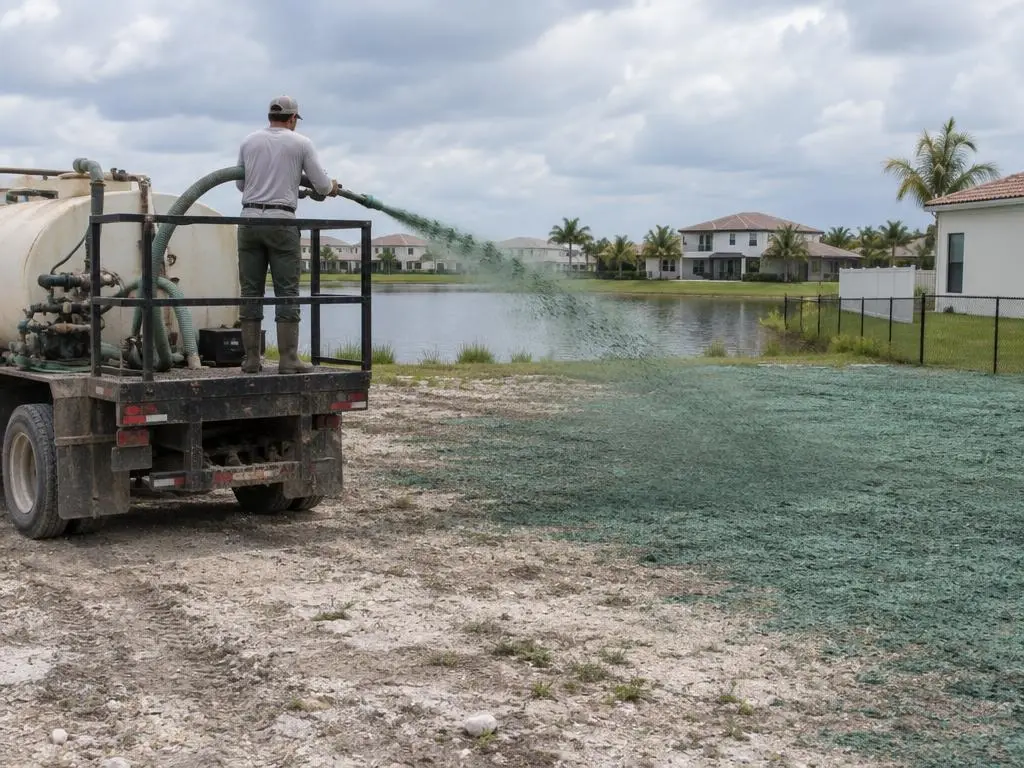
Six services, sized for anything from one backyard up to a builder site covering several acres.
Residential Hydroseeding
New home lawns and full yard renovations seeded with bahia or bermuda over a proper root zone.
Learn more →Commercial Property Hydroseeding
Seed and mulch for builder lots, retention areas, roadsides and commercial grounds, sized to the acre.
Learn more →Canal Bank & Swale Erosion Control
Swale, ditch, canal bank and pond bank stabilization using hydromulch, erosion control blankets or bonded fiber matrix.
Learn more →Silt Fence & Inlet Filters
Silt fence installation, drain inlet protection and sediment control on construction and renovation jobs.
Learn more →Lot Grading & Topsoil Fill
Dirt work, yard and land grading, and topsoil that give seed a real root zone and water a place to go.
Learn more →Bare Spot Repair & Overseeding
Lawn repair and overseeding for thin bahia and bermuda lawns, plus honest advice when sod is the better fix.
Learn more →Show Us the Bare Ground
We will look at your soil, water and timing, then put a price in writing.